Those of us who live in bigger bodies often visibly struggle with our weight, our body image, and society’s perception of us. The conversation about body image is so much more nuanced. One of those distinctions comes when we consider whether we want to call ourselves “plus-size” or not.
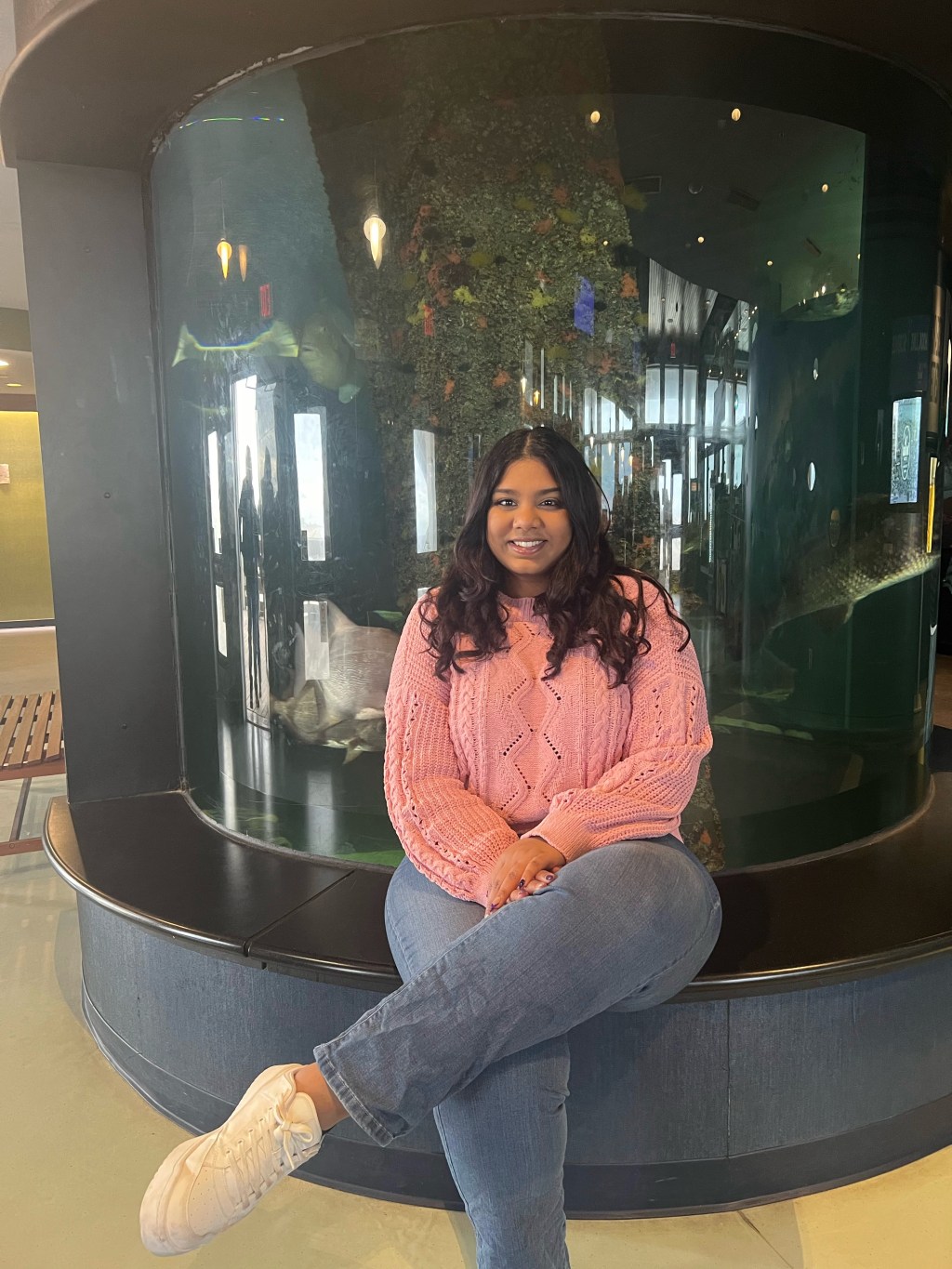
I recently had an incredible conversation with Mrudula (Mru) Murari, a 21-year-old student from Rowan University. She is no stranger to this topic. She is someone who lives this experience and has spent years learning to navigate the world of body expectations, internalized struggles, and self-love.
Mru has been plus-size almost her entire life. She was open about how this identity has shaped how she moves through the world, which isn’t always easy. “There’s a part of you that wants to go to the gym and work on your body and look normal,” she said, referencing the pressure to conform to society’s ideal body shape. “But then there’s also this anger because you can’t find clothes that fit you… you can’t live your life like other girls do.”
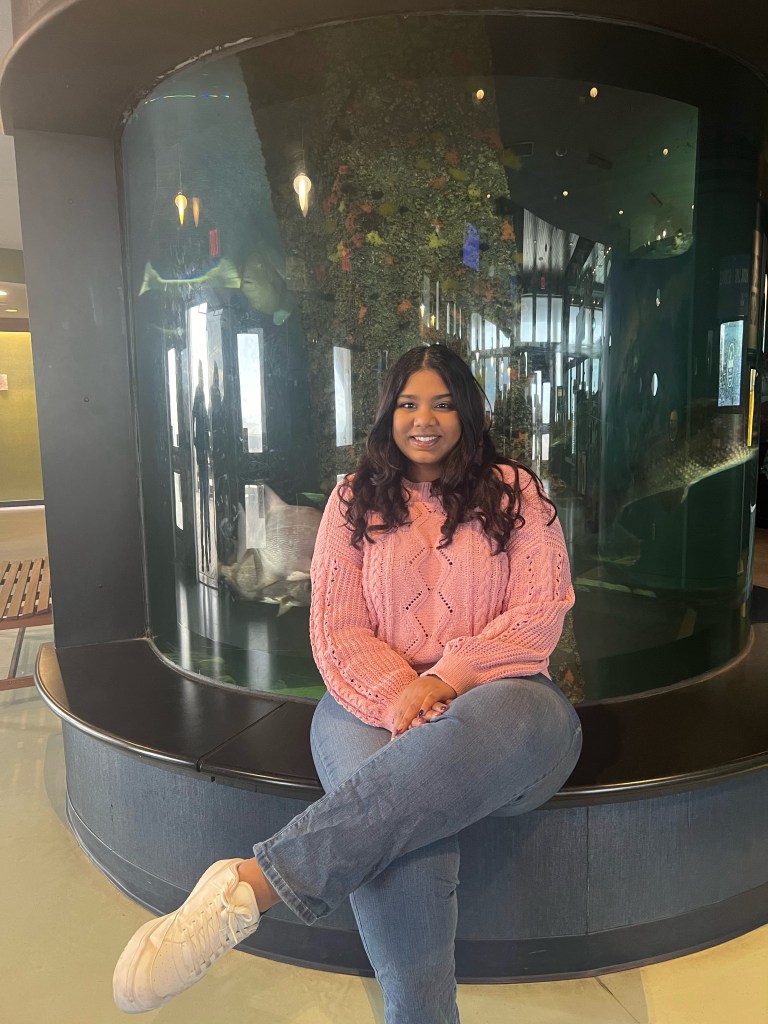
Many people like her, living in fat bodies, know the frustration of trying to find clothes that actually fit or even the feeling that you’re constantly being judged for your size. It’s exhausting, it’s isolating, and it often leads to feelings of self-hatred.
There have been times in Mru’s life when she has not been happy with how she looked or how she was perceived by others. She shared how she’s been caught up in the rabbit hole of trying to fix herself. “I’ve starved myself; I’ve tried crazy diets; I’ve tried crazy supplements to get myself to a skinnier place, and it hasn’t worked.”
It’s genuinely heartbreaking when you think of how much energy and self-doubt goes into trying to live up to a standard that doesn’t consider your body’s unique needs. Mru doesn’t want to be seen for her weight; she wants to be seen as a whole person with a personality, a heart, and characteristics that go beyond her physical appearance.
Unless you’re a close friend, you will never find Mru eating in public. “I’m very nervous to eat around other people. I tend to apologize for myself when I order food. Like, if a guy takes me out on a date, I’ll apologize for the amount of food I’m ordering.”
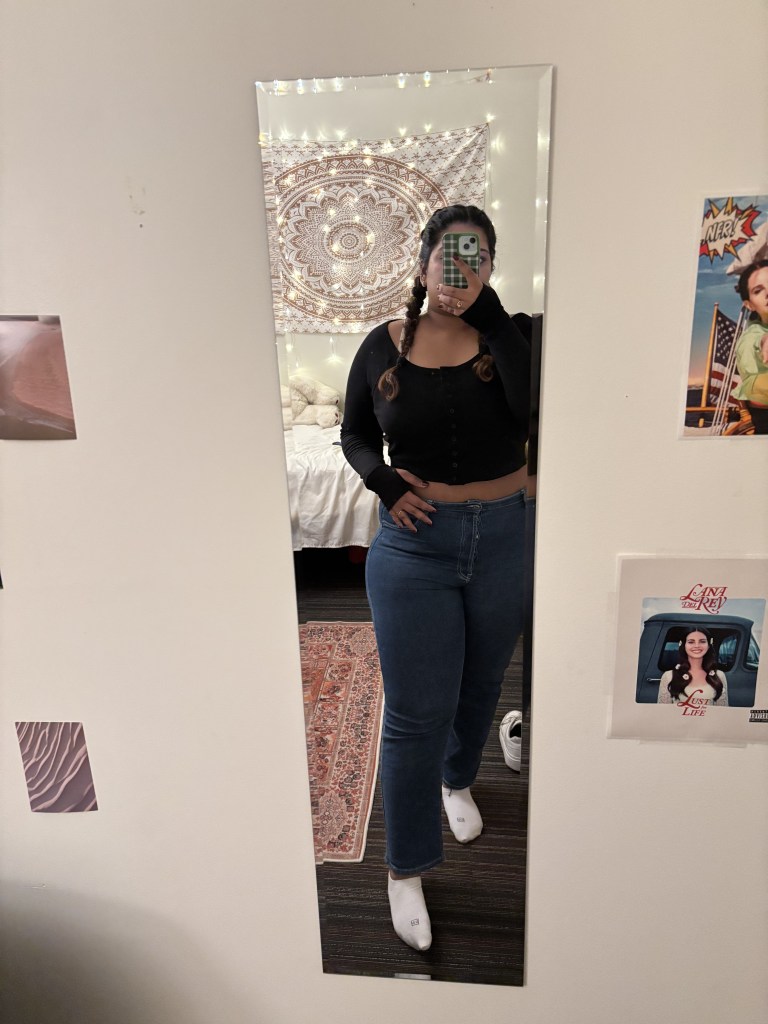
Mru points out that many of these everyday spaces are simply not designed for people who don’t fit into society’s standard body. In her view, it becomes a feeling of inconvenience for not fitting into the space, both literally and figuratively. “There’s a lot of judgment that comes from people. Sometimes, even friends make fun of you.” Mru shares that constant judgment makes it even harder to embrace herself because she’s repeatedly reminded that her body doesn’t fit the norm.
Every day, Mru tries to do something to lose weight. She has the added challenge of having polycystic ovarian syndrome (PCOS), which makes losing weight that much harder. “It’s frustrating to see my close friends losing weight. We’re doing the same thing, but they’re losing weight and I’m not. This is something that took me time to understand; the body doesn’t work the same way for everyone, even if we’re doing the same things.”
On every single social media platform, Mru says she has come across a video with a strong bias against the plus-size community. “To them, I’d say everyone’s body is different. Everyone’s metabolism is different. Everyone’s life is different. You can’t just say ‘lose weight’ to someone without knowing what they’re dealing with. Work, school, family, mental health – all that comes into play. You can’t just put everything down and work on your body. Life doesn’t let you.”
Mru has shared that she was often expected to give up everything just to shrink herself to fit into societal expectations. Some of these expectations even came from her parents. The sad truth is that life doesn’t stop for anyone, so how can we possibly find the time to fit in workouts and restrictive eating habits?
For Mru, true inclusivity is not about just adding a few plus-size options to a fashion line or posting a fat person on a campaign. It’s about making spaces to experience daily life that can be accessible to everyone. “Plus-size people need to have space to exist without constantly having to fight to fit in,” she said. “It’s the little things that make a difference. Small things, like sitting comfortably without being judged or existing without feeling like you’re inconveniencing the world.”
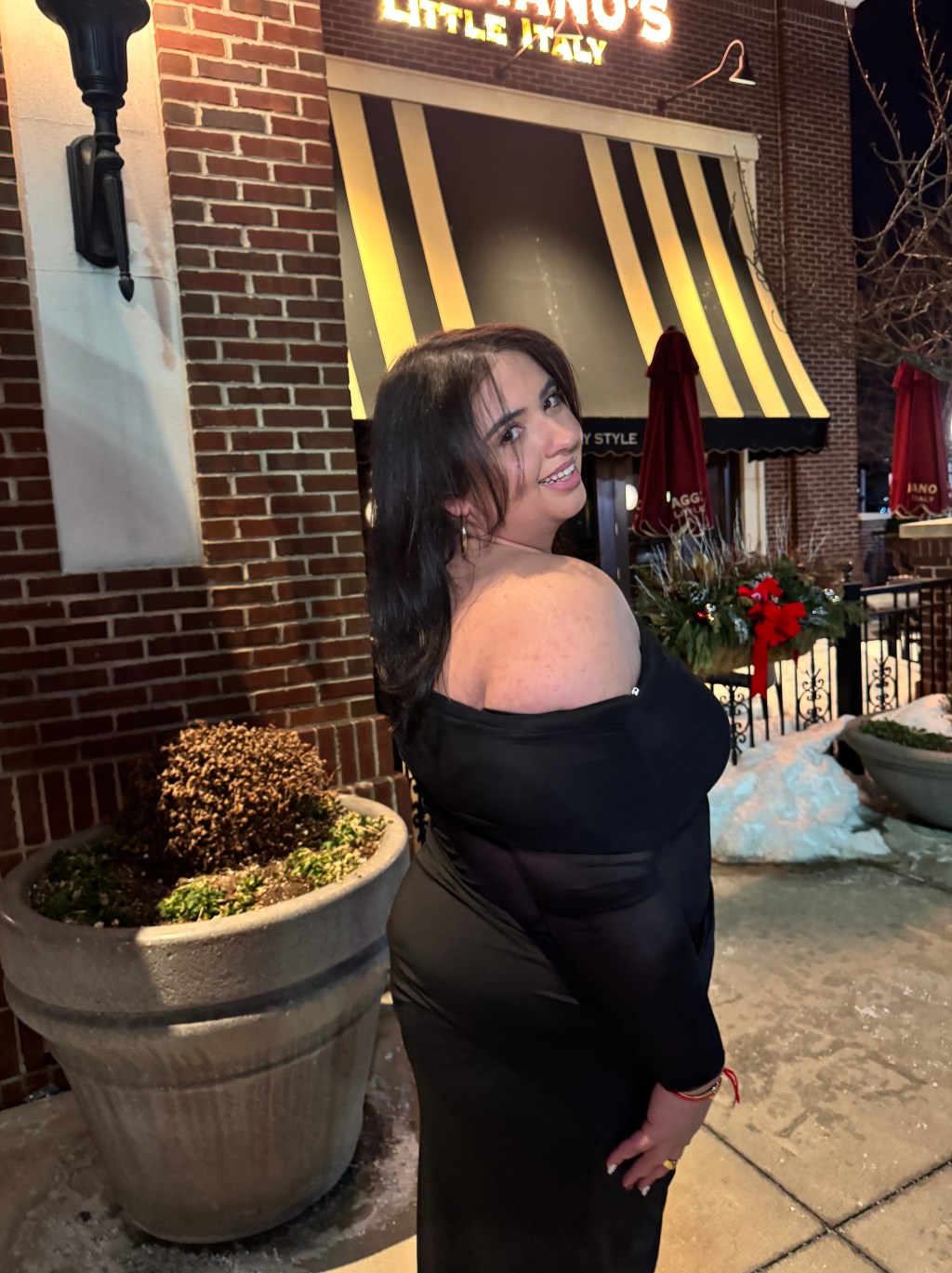
Many people like Mru must constantly negotiate their bodies in a world that isn’t built for them. Living as a bigger person means always seeing your body through the lens of judgment, assumptions, and expectations and trying to adjust to a lifestyle that isn’t meant for you.



 In Full Figure
Leave a reply to hannahd913 Cancel reply